Live: Case of a homeowner in Pompaples, Vaud – March 24, 2026
The request: VITO Energies was contacted by a property owner who rents out three apartments heated by electric radiators, as well as a retail store. The four properties consume nearly 100,000 kWh per year. The owner initially wishes to reduce his electricity bill by installing solar panels. The planned local district heating project is expected to be located near our client’s property.
The Project: Before issuing simple “solar” requests for proposals, VITO Energies will conduct a comprehensive energy analysis of the property to verify that the owner’s request to install solar panels is reasonable and aligns with a long-term policy of reducing the carbon footprint and ensuring the profitability of energy investments. VITO will conduct a comprehensive assessment of the building’s current and future status based on the results of, for example, energy efficiency analyses conducted using a thermal imaging camera. A review against the local district heating development plan will also be carried out. An investment priority plan will be established.
Next step: Decide by the end of April, based on the analysis, whether the owner should indeed start by installing solar panels.
To be continued…
Excerpt from the Vaud Canton website:
A DEVICE TO CLEAN YOUR ELECTRIC HEATER
The deadline for upgrading electric heating systems isJanuary 1, 2033.
Case of centralized electric heating
Owners of buildings equipped with centralized electric heating systems (with a heat distribution network) must replace them with systems that primarily use renewable energy sources (heat pumps, wood-fired boilers, connection to a district heating network, etc.).
Case Study: Decentralized Electric Heating
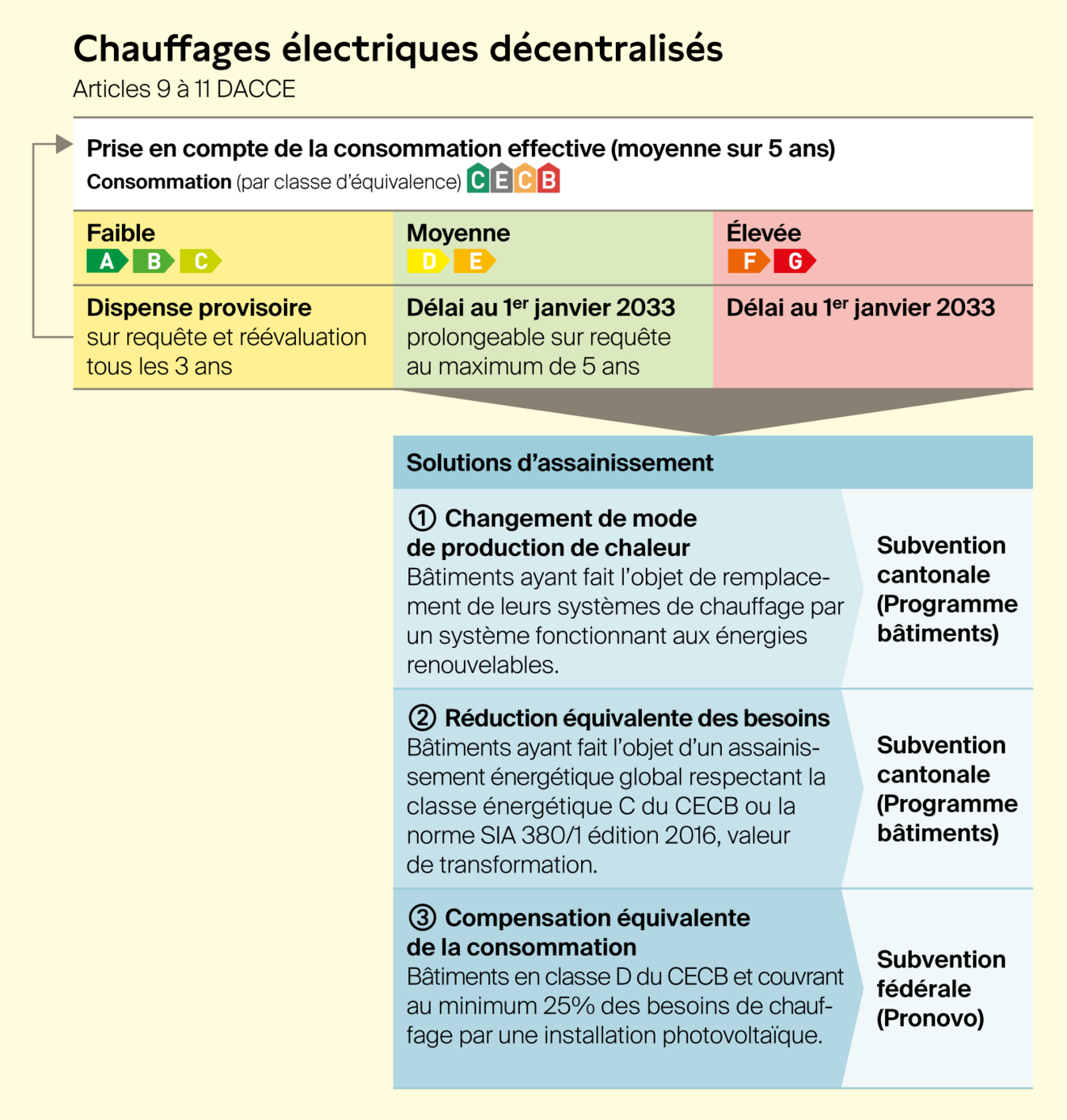
Owners of buildings that use decentralized electric heating (without a district heating network) have three options for complying with their retrofitting requirements:
- replace it entirely with another system that relies primarily on renewable energy
- or renovate the building to improve the energy performance of its thermal envelope and bring it up to the energy performance standards of Class A, B, or C buildings as defined by the Cantonal Energy Performance Certificate (CECB)
- or offset 25% of the heating system’s electricity consumption through the simultaneous generation of electricity from renewable sources, such as a solar photovoltaic system, provided the building is already well insulated and has a rating of at least Class D on the Cantonal Energy Performance Certificate (CECB)
An extension of the retrofit deadlines is possible if the building’s energy consumption is considered low or moderate:
- The renovation deadline may be extended by up to 5 years if the building’s energy consumption is average (classes D or E on the Cantonal Energy Performance Certificate, section: overall energy efficiency)
- A temporary exemption may be granted, upon request and subject to reassessment every three years, if the building’s electricity consumption is low (classes A, B, or C on the Cantonal Energy Performance Certificate, section: overall energy efficiency).